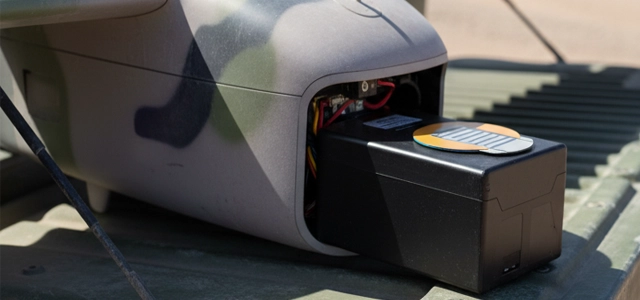
Standard Industries' thin-film technologies deliver what attritable warfare demands: radical SWAP reduction, unprecedented manufacturing speed, breakthrough cost efficiency, and forward-deployable production for groups 1-3 UAS, OWSUAS, and other attritable platforms air, land or sea.

Group 1-3 UAS and attritable platforms operate under physics and economics that traditional defense electronics cannot satisfy. Every gram determines payload capacity, sensor quality, flight time, or the electronic warfare capability that keeps platforms mission-effective in contested electromagnetic environments. Every dollar determines whether platforms can be produced in the volumes distributed warfare demands—or remain exquisite systems too valuable to risk. Every hour from design to deployment determines whether capabilities arrive faster than adversaries can adapt.
Traditional defense electronics weren't built for these constraints. Rigid PCBs, heavy wire harnesses, bulky discrete antennas, and conventional sensors consume 15-25% of total vehicle weight while delivering single functions from fixed geometries. When adversaries jam communications, spoof sensors, and target platforms through their RF signatures, these legacy architectures become operational liabilities rather than force multipliers.
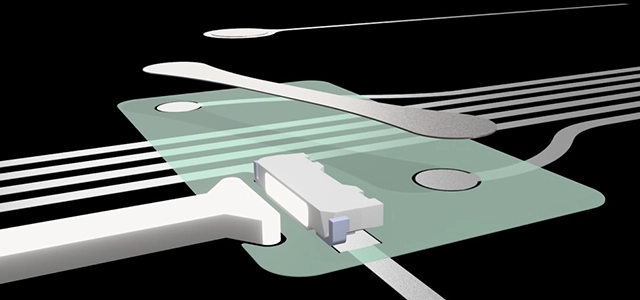
Standard Industries solves what traditional contractors cannot: paper-thin systems delivering multiple warfare functions from conformal layers thinner than a credit card. With 40 years of thin-film engineering heritage from manned aerospace and naval platforms, we're adapting proven defense technologies to the unmanned domain at 60-98% weight reduction. The result transforms attritable platform economics: electromagnetic warfare surfaces that jam and deceive simultaneously, transparent antennas that don't compromise aerodynamics, flexible power systems lighter than the wiring they replace, and sensor arrays conforming to any surface geometry.
When Every Gram, Dollar, and Hour Determines Mission Success.
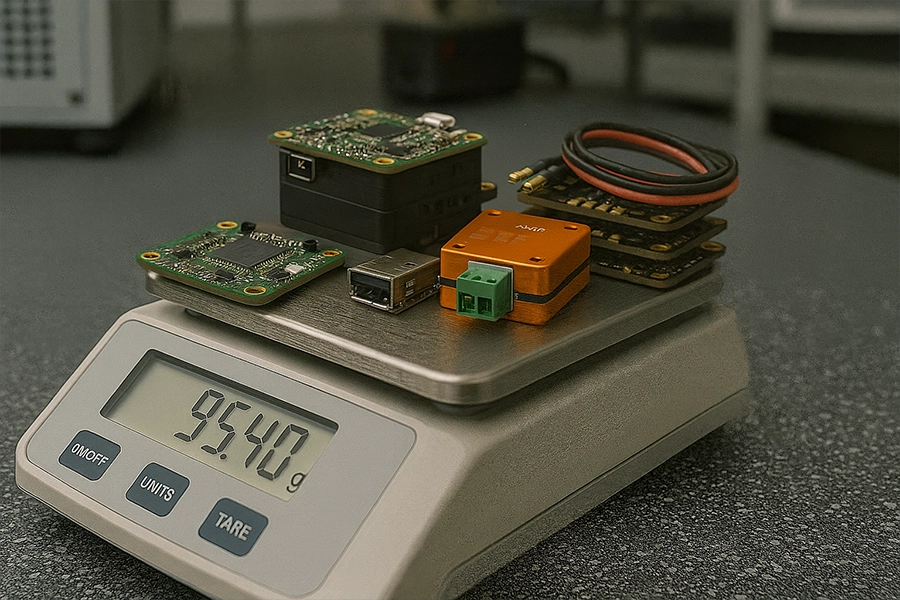
Traditional electronics consume 15-25% of total UAS weight through rigid PCBs, wire harnesses, and discrete antennas. Thin-film integration achieves:
For Group 1-3 platforms, this translates directly to 100-500g+ additional payload capacity or 15-20%+ endurance gains—the difference between reaching the target or falling short.
More payload, less drag, and faster response times.
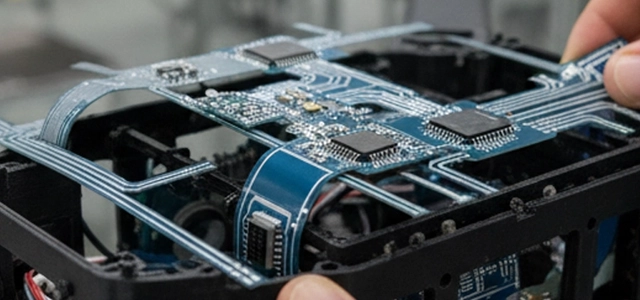
Sub-millimeter flexible circuits (0.1-0.5mm versus 5-10mm wire bundles) free critical internal volume for sensors, warheads, or extended battery capacity. Our conformal antennas and metasurfaces eliminate aerodynamic penalties entirely by printing directly onto airframe surfaces at 0.1-1.0mm thickness.
When adversaries control the spectrum, these ultra-thin electromagnetic warfare surfaces deliver distributed jamming, adaptive RF signature control, and multi-spectral deception that make platforms invisible, deceptive, or overwhelming—all without compromising stealth geometry.
From Design to Deployment in Days, Not Months.
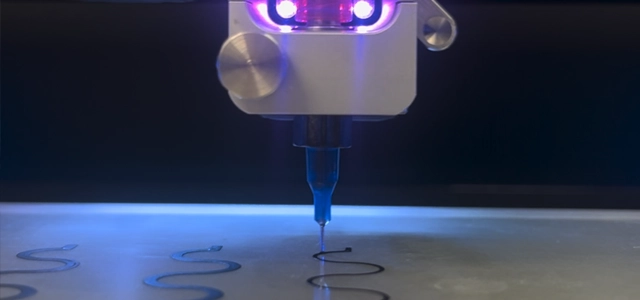
Traditional PCB fabrication requires 10-20 process steps over 2-4 week lead times. Thin-film screen printing and roll-to-roll manufacturing enable 1-3 day prototyping cycles versus 14-21 days for conventional approaches. Our additive processes eliminate photolithography masks, subtractive etching, drilling, and plating—enabling same-day design iterations that keep pace with evolving threats.
This agility scales seamlessly from prototype to volume production without retooling. Roll-to-roll and screnn printing processing operates 10-100× faster than sequential PCB fabrication, while In-Mold Structural Electronics (IMSE) creates single-piece structural harnesses by screen-printing on flat substrates, thermoforming to airframe geometry, and overmolding in one operation.
Assembly time reductions of 80-89% mean mission-specific UAS configurations can be fielded as rapidly as threats emerge.
Enable Mass Production
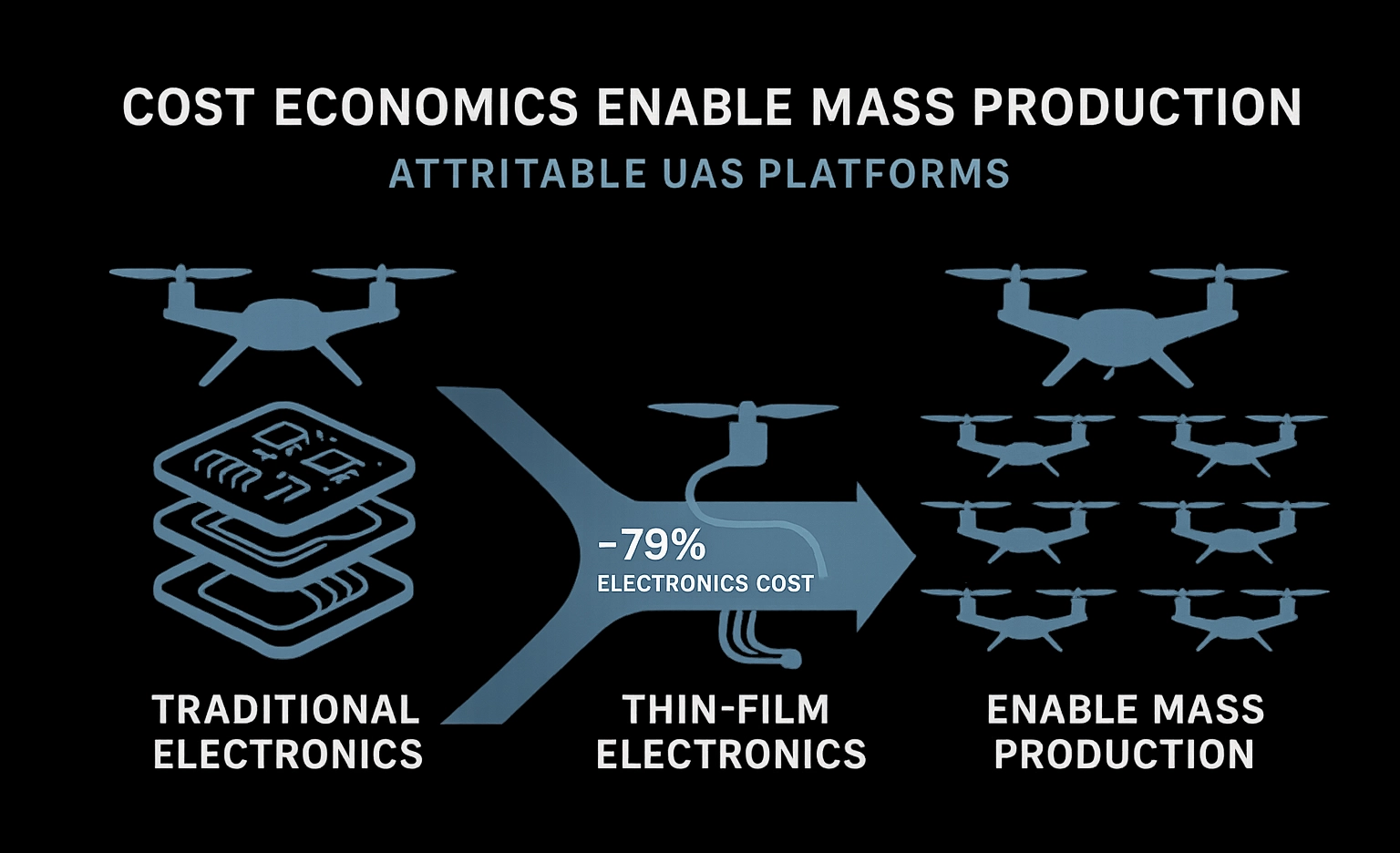
Attritable platforms demand unit economics that accept combat loss without mission failure—typically under $100K for Group 2 platforms. Traditional aerospace electronics constitute 30-50% of platform cost, making true attritability unachievable.
Thin-film manufacturing transforms this calculus through 70-85% material cost reduction (10-50µm silver ink layers versus millimeter-scale copper), elimination of expensive tooling (no $5K-15K photomasks per layer), and 71% BOM complexity reduction by consolidating discrete harnesses, connectors, and multi-board stacks into unified flexible circuits. Real-world implementations demonstrate the impact: traditional UAV electronics stacks costing $58 replaced by thin-film equivalents at $12—a 79% cost reduction.
These savings enable the mass production volumes distributed warfare demands while maintaining sovereign domestic supply chains.
These aren't experimental concepts—they're capabilities with established reliability testing protocols (MIL-STD-810, MIL-PRF-55110, MIL-STD-883) confirming performance through temperature cycling (-55°C to +125°C), humidity, vibration, and shock environments. Standard Industries adapts these proven technologies to unmanned platforms at radical size and weight reductions, making capabilities once reserved for billion-dollar systems available for attritable autonomous operations.
Low-Probability Communications That Don't Compromise Stealth
Transparent conformal antennas can maintain optical clarity while transmitting HF through Ka-band—turning airframes into communication surfaces without aerodynamic or visual penalty.
Eliminating Weight Without Sacrificing Performance
Printed power distribution, flexible circuits, and ultra-thin harnesses deliver 98% weight reduction versus traditional wiring while maintaining full performance.
Real-Time Intelligence from Platforms That See, Feel, and Adapt
Printed sensor arrays detect pressure, strain, temperature, and environmental conditions from flexible substrates that conform to curved surfaces and operate in extreme conditions.
We've developed foundational thin-film technologies—frequency-selective metasurfaces, conformal antennas, adaptive thermal layers, and manufacturing processes —that have been proven for decades across larger manned platforms. Now we're seeking collaboration partners to adapt these capabilities to the extreme SWAP constraints and attritable economics of Group 1-3 UAS and other unmanned systems.
Proven thin-film manufacturing with 1-3 day prototyping cycles, 40 years materials science expertise, domestic production capacity, and field-deployable manufacturing systems.
Operational requirements and mission profiles, RF/EMSO domain expertise and effects validation, platform integration pathways and access to testing environments, development funding or demonstration programs.
Contact us to discuss how your operational insight combined with our manufacturing capabilities can deliver conformal EMSO systems for unmanned platforms operating in contested electromagnetic environments.
Forward operating bases face supply chain vulnerabilities that make 70% of convoys—delivering fuel, water, and replacement components—prime targets for adversary attack. Thin-film technologies transform this vulnerability into operational advantage through containerized, deployable manufacturing systems that produce antennas, circuits, sensors, and electromagnetic warfare surfaces on-site.
Our proposed Ready-To-Roll (R2R) mobile manufacturing platform can operate in austere environments with low thermal budgets (many conductive inks cure below 150°C), enabling portable ovens or photonic sintering at forward positions. Custom mission-specific sensor arrays and antenna patterns can be printed on-demand to address emerging intelligence, while 3D-printed structural components integrate with thin-film electronics during expeditionary manufacturing. This capability reduces convoy requirements by enabling local production of replacement harnesses, conformal antenna arrays, and distributed jamming surfaces—enhancing force resilience when supply lines are contested.
Standard Industries adapts proven aerospace and naval thin-film technologies to unmanned platforms, delivering electromagnetic dominance, structural electronics, and expeditionary manufacturing at the speed and scale attritable warfare requires.
Contact Us